
The Real Asset Is the Beginner
We’ve spent this series talking about money. Prize funds, sponsorship, tours, the machine that turns eyeballs into cash. So let me end on the least glamorous number in Craig Tiley’s whole career, because it’s the one that actually matters most.
Under Tiley, tennis became the second most-played sport in Australia. Over five years, court bookings tripled and coaching numbers climbed. He’s now off to run tennis in the US with a stated goal of reaching 35 million players. Not 35 million viewers. Players. People with a racket in their hand.
That’s the tell. For all the festivals and broadcast deals, the thing Tiley protected most fiercely was participation. The ordinary person who plays.
And here’s why that isn’t sentimental, it’s structural. Everything we’ve talked about in this series sits on top of the base. Rolex doesn’t pay Coello for his trophies, it pays for his audience, and that audience is, in the end, people who play the game or love watching it because they’ve felt what it’s like. Sponsors, broadcasters, tours, all of it is downstream of one thing: millions of people who actually pick up a racket. Take the base away and the whole pyramid is just a logo on an empty court.
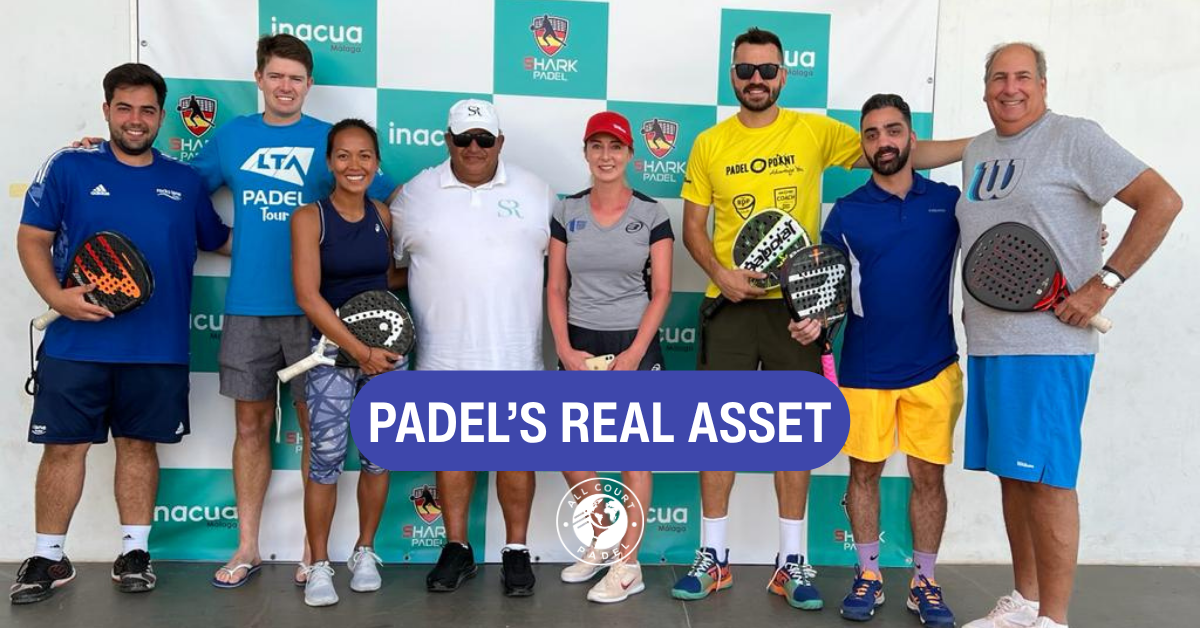
The beginner, in other words, is the asset. Not the world number one. The nervous first-timer who books a court on a Tuesday and isn’t sure they’ll be any good.
Now look at padel. On paper it has what every sport dreams of: roughly 35 million players worldwide and the fastest growth of any sport on earth. The base is enormous and getting bigger by the week. That should be the most reassuring thing about the sport.
But a big base and a strong base aren’t the same thing. Courts are going up faster than anyone can staff them. Coaching, the thing that actually turns a curious first-timer into a committed weekly player, is stretched thin and wildly inconsistent. Plenty of people try padel once, have a scrappy, under-coached first hour, and never come back. Facilities are growing. Whether committed players are growing at the same rate is a very different question, and nobody in this country is really measuring it.
That’s the bit padel keeps under-investing in, because it isn’t glamorous. It’s far more exciting to talk about Premier Padel and watch deals than about whether a beginner had a good enough first session to book a second. But that first session is the whole sport. It’s where every future subscriber, spectator and sponsor’s audience is actually made.
Tiley understood this instinctively. When he joined Tennis Australia in 2005, he didn’t start with the festival. He started with a ten-year plan to rebuild the pipeline: the coaching, the pathways, the participation, the boring foundational work. The three-week party came later, and it only worked because the base was there to fill the seats. Padel, in its rush, is at real risk of trying to build the party first.
So if there’s one lesson I’d want every club owner, coach and investor in this sport to take from Tiley, it’s this. The money is at the top, but the future is at the bottom. Guard the beginner’s experience like it’s the most valuable thing you own, because it is. Get more people playing, keep them playing, and give them good coaching while they fall for the game, and the tours and sponsors and revenue take care of themselves. Neglect it, and padel becomes a spike on a graph that flattens the moment the novelty fades.
Padel has won the attention. It’s winning the players too, faster than anyone expected. The only question is whether the sport is grown-up enough to look after them, or whether it’s too busy staring at the top of the pyramid to notice the bottom is where it actually stands.
